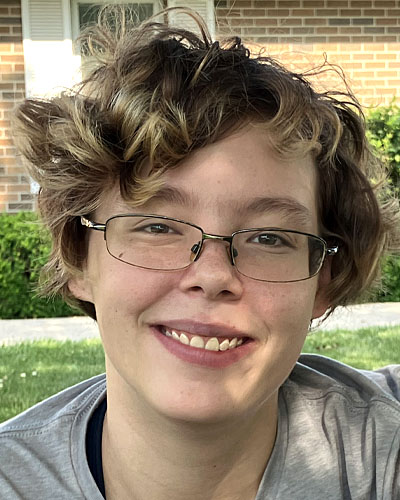
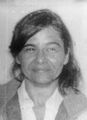
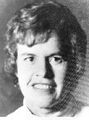
Barbara Lealyn Lenz was a 31-year-old white woman and mother whose disappearance from Woodbine, Iowa, in Harrison County, on May 6, 1989, would eventually become one of the state's longest-running cold case investigations. Barbara had a three-year-old daughter named Lindsy and was involved in a relationship with Robert Allen Davis, a man she had been dating for approximately two years. In the weeks leading up to her disappearance, Barbara's personal life had become increasingly troubled, particularly because of violence within that relationship. At the time, her mother was hospitalized with pneumonia in Missouri Valley, Iowa, and Barbara had been making daily visits to see her. She also maintained ties to Omaha, Nebraska, where her young daughter was living with her father, Barbara's former boyfriend. On Saturday, May 6, Barbara reportedly intended to travel to Omaha to visit them.
Davis later told investigators that he had dropped Barbara off at her apartment in Woodbine that day. However, she never arrived at her intended destination, and no one in her family would hear from her again. What initially appeared to be a mysterious disappearance would ultimately lead investigators to a far more disturbing conclusion.
Barbara's disappearance immediately alarmed those who knew her, particularly because she had been consistent about visiting her hospitalized mother. After Barbara failed to appear for two consecutive days, her mother became concerned and asked relatives to check on her. What they discovered inside Barbara's apartment suggested that something had interrupted her ordinary activities. A coffee pot was still switched on and approximately half-full, laundry had been left partially folded, and her purse and keys remained inside. Her vehicle was also still at the residence. When family members formally reported her missing to the Woodbine Police Department on May 17, 1989, they explained that their last confirmed contact with her had been on May 3. Officers examining the apartment also discovered that her pets had apparently gone without care for some time. Her wallet, clothing, luggage, and other personal belongings were still present. Although investigators did not find obvious signs of a physical struggle, there was nothing to suggest Barbara had prepared for an extended absence. She had not informed family members or friends that she intended to leave, and her sudden disappearance was entirely inconsistent with her established routines. Investigators increasingly suspected that she had been taken against her will.
As authorities began reconstructing Barbara's final days, their attention turned toward her relationship with Robert Davis. The couple had met during the summer of 1987, when Davis was helping Barbara's family bale hay on a farm near Woodbine. According to testimony later provided by Barbara's sister, Mary Meseck, the relationship appeared positive initially but eventually became increasingly volatile and abusive. Family members and acquaintances described witnessing arguments, bruises, and other injuries. Investigators learned that Davis had allegedly strangled Barbara on multiple occasions, sometimes causing her to lose consciousness. During one incident, she required medical treatment after being rendered unconscious. Witnesses also described seeing Davis drag Barbara's unconscious body across a parking lot following another confrontation. Barbara had reportedly confided in several people that she feared Davis and wanted to escape the relationship. At least two witnesses told investigators that Davis had threatened to kill her if she attempted to leave him. Those statements became particularly significant as investigators examined the circumstances surrounding her disappearance.
The investigation also revealed troubling information about Barbara's efforts to protect her daughter. Lindsy had been living with her father in Omaha, and Barbara's family later explained that concerns about Davis's violent behavior had played a role in the custody arrangement. Investigators learned that Davis resented Barbara's visits to Omaha, particularly because those visits involved her former boyfriend. According to investigative records, arguments and physical assaults sometimes followed these trips. Davis acknowledged that he and Barbara had argued before her planned visit on May 6, 1989. One witness reported seeing Davis injure Barbara's face with a sharp object during a confrontation, an incident later described during court proceedings as involving a sharpened boot spur. Another witness reported seeing Barbara and Davis leave her apartment complex together. These accounts raised serious questions about Davis's claim that he had simply dropped Barbara off at her residence and had no knowledge of what happened afterward.
During his initial interviews with police, Davis claimed that Barbara had telephoned him later on May 6 and said she was in Omaha visiting her daughter. Investigators were unable to substantiate that account and determined that Barbara had not arrived at the location Davis described. The inconsistencies in his statements, combined with the history of violence and threats reported by witnesses, strengthened suspicions that he knew more about her disappearance than he was admitting. The Woodbine Police Department requested assistance from the Iowa Division of Criminal Investigation in June 1989, and authorities began pursuing leads throughout the region. Investigators interviewed relatives, friends, acquaintances, and other potential witnesses while exploring possible locations where Barbara might have been taken. Despite those efforts, they were unable to locate her or recover evidence sufficient to support a murder prosecution at that time.
One particularly disturbing lead involved information that Davis and his brother had allegedly buried something in a rural area near Davis's residence shortly after Barbara disappeared. A witness later told investigators that Davis's brother had indicated a location where the two men had buried an object wrapped in plastic. The allegation raised the possibility that Barbara's remains might have been concealed somewhere in the surrounding countryside, but authorities did not establish that the buried object was connected to her disappearance. As the years passed, investigators continued examining possible leads and unidentified remains. In May 2006, mushroom hunters discovered a large barrel containing a woman's skeletal remains near Council Bluffs, Iowa. The discovery initially raised questions about whether the remains might belong to Barbara, but dental comparisons established that they belonged to someone else. For Barbara's family, the discovery offered no answers, and the uncertainty surrounding her whereabouts continued.
Barbara's case remained under investigation for decades, surviving changes in law enforcement personnel, investigative priorities, and available technology. Her disappearance was included among the cold cases reviewed by the Iowa Division of Criminal Investigation, and investigators continued collecting information that might eventually identify what had happened to her. A family DNA reference profile was also developed to assist with possible future identification. Meanwhile, witnesses continued to provide information about Davis's behavior after Barbara vanished. Investigators learned that he had allegedly made threatening remarks to other women during later arguments, suggesting that they could suffer the same fate as Barbara. One former romantic partner reported that Davis warned her she could end up like Barbara during a confrontation. Those statements became important evidence because they suggested that Davis was invoking Barbara's disappearance as a threat long after she had vanished.
A significant development occurred when investigators began reexamining the case with renewed attention to previously overlooked witnesses and evidence. Iowa's Attorney General established a new statewide Cold Case Unit in July 2024, bringing additional investigative and prosecutorial resources to unresolved homicides and suspicious disappearances. Barbara's case became one of its early priorities. Working alongside the Iowa Division of Criminal Investigation, the Harrison County Sheriff's Office, and local authorities, investigators revisited statements, interviewed additional witnesses, and examined the history of abuse in Barbara's relationship with Davis. The renewed investigation strengthened the case against him, even though Barbara's remains had never been recovered. After nearly 36 years without an arrest, authorities finally took Robert Allen Davis into custody on March 10, 2025, during a traffic stop. Davis, who was then living in Council Bluffs, was initially charged with first-degree murder in connection with Barbara's disappearance. His arrest marked a major breakthrough for both her family and Iowa's newly established Cold Case Unit.
The prosecution eventually proceeded on a charge of second-degree murder, and Davis's trial began on March 24, 2026, at the Pottawattamie County Courthouse. Prosecutors presented the case as a homicide that could be established through witness testimony, the history of abuse, threatening statements, and the circumstances surrounding Barbara's disappearance, despite the absence of her body. Family members testified about their growing concerns during Barbara's relationship with Davis, while other witnesses described violent incidents they had observed. Prosecutors also revisited Davis's account of the day Barbara vanished and the statements he allegedly made to subsequent romantic partners. The defense maintained that the evidence did not establish that Davis had killed Barbara, arguing that a history of domestic violence was not sufficient proof of murder. Defense attorneys emphasized the lack of physical evidence and the fact that no remains had ever been discovered. Nevertheless, after hearing the testimony and examining the evidence, the jury deliberated for less than four hours before finding Davis guilty of second-degree murder on March 31, 2026.
On May 22, 2026, Davis appeared in Harrison County District Court for sentencing. Barbara's relatives were finally given an opportunity to describe the devastating consequences of losing her and living for nearly four decades without knowing where her remains had been concealed. Her daughter, Lindsy Baumgart, who had been only three years old when Barbara disappeared, spoke about the lasting impact of growing up without her mother. Barbara's sisters and granddaughters also described the grief, fear, and unanswered questions that had followed the family throughout their lives. They expressed their desire to recover Barbara's remains so that she could receive a proper burial. Davis continued to deny responsibility for her death. The judge sentenced him to 50 years in prison, with reports indicating that he must serve 35 years before becoming eligible for parole or work release. The conviction brought a measure of justice to Barbara's surviving relatives and marked the first successful murder prosecution associated with Iowa's new Cold Case Unit.
Despite the conviction and lengthy prison sentence, one of the most painful aspects of Barbara's disappearance remains unresolved. Her body has never been recovered, and the precise circumstances of her death, including the location where her remains were concealed, have not been publicly established. Investigators have not announced any discovery that would allow her family to bring her home for burial. The absence of physical remains prevented authorities from determining an exact cause of death, but the jury concluded that the evidence established Davis's criminal responsibility for her murder. Official reports indicate that the homicide investigation reached a successful prosecution in 2026, although Barbara's physical whereabouts remain unknown. Her case stands as a reminder of the devastating consequences of domestic violence, the lasting suffering experienced by families of missing loved ones, and the importance of preserving evidence and witness accounts in cold case investigations. What began with a worried mother, an unattended apartment, and a young woman who never arrived to visit her daughter ultimately became a decades-long pursuit of accountability. Nearly 37 years after Barbara Lealyn Lenz disappeared from Woodbine, Iowa, the man responsible for her murder was convicted and sentenced, bringing legal resolution to the case while leaving her family with the enduring hope that her remains will someday be recovered and she can finally be laid to rest.Last Seen: May 6, 1989