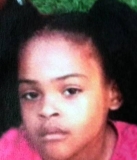
In the early morning hours of August 1, 1999, 35-year-old Yolanda Evette Baker, a mother of young twins, was seen for the last time at her home in Washington, D.C. She and her boyfriend, Terrance Barnett, had just returned to their residence in the 400 block of 44th Street, NE, after attending a family party in Prince George's County. Concerns for her welfare grew when Yolanda, known to her family as "Princess," failed to pick up her children from the babysitter's house. This uncharacteristic act prompted her sister to file a missing person report with the Metropolitan Police Department on August 4, 1999. In the days following her disappearance, Barnett offered conflicting stories about Yolanda's whereabouts to her family and never reported her missing to the police himself.
The investigation into Yolanda's disappearance soon uncovered disturbing evidence.
Nearly a week after she was last seen, her 1999 Toyota Corolla was discovered abandoned in an alley. Investigators who gained entry to the vehicle immediately noted a foul odor coming from the trunk, where they found drops of Yolanda's blood on the carpet and in the spare tire well. A search of the home she shared with Barnett revealed further signs of a violent struggle. The carpet in the master bedroom had been removed, and someone had attempted to clean the home with bleach. Despite the cleanup efforts, forensic testing revealed blood spatter containing DNA from both Yolanda and Barnett on the walls, ceiling, and floor, as well as on the shirt Barnett was wearing the night she vanished. The investigation also brought to light a long and troubled history of domestic violence, with family members reporting they had often seen Yolanda with bruises and other injuries. She had previously secured an eighteen-month restraining order against Barnett, which expired shortly before her disappearance.
For years, Yolanda's family relentlessly pushed for answers, contacting city officials to keep the case active. Their efforts led to the case being re-examined by the cold case unit. In February 2009, Yolanda Baker was declared legally dead. A few months later, in June 2009, Terrance Barnett was arrested and charged with her murder. In March 2010, following a three-week trial, a jury found Barnett guilty of second-degree murder. He was later sentenced to 20 years to life in prison. The case of Yolanda Baker is a heartbreaking story of a mother taken from her children and family through an act of domestic violence. Despite a conviction bringing a measure of justice, the profound loss for her loved ones remains, as her body has never been recovered.Last Seen: Aug 1, 1999