
Feb 26, 2014
Jun 24, 2024
Elizabeth
Converse
101
49
67 inches
70 inches
140 lbs
170 lbs
White / Caucasian
Female
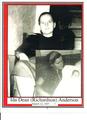
In the summer of 1974, a 50-year-old woman named Elizabeth "Connie" Converse made a decision that would turn her into an enduring enigma. A singer-songwriter who had been active in the New York City folk scene of the 1950s, she was living in Ann Arbor, Michigan, when she quietly packed her belongings into her Volkswagen Beetle and drove away. She was never seen or heard from again. Before leaving, she mailed a series of letters to her friends and family, expressing her intention to start a new life. These letters, filled with a sense of finality, offered a glimpse into the mind of a woman who felt disconnected from the world around her. In one, she wrote, "Human society fascinates me and awes me and fills me with grief and joy; I just can't find my place to plug into it." Her disappearance came after a period of deep depression and professional disappointment. Converse's journey to that point had been one of both artistic brilliance and personal struggle. Born in Laconia, New Hampshire, in 1924, she was a gifted academic and musician. After dropping out of Mount Holyoke College, she moved to Greenwich Village in the 1950s, where she began writing and performing her unique and introspective songs. Her music was ahead of its time, blending folk, blues, and classical influences with deeply personal lyrics. Despite a television appearance on Walter Cronkite's show, she failed to achieve commercial success, a reality that deeply disheartened her. In 1961, she left New York for Ann Arbor to be closer to her brother, taking a job as a managing editor for the *Journal of Conflict Resolution*. However, professional setbacks, including the journal's relocation to Yale, compounded her feelings of disillusionment. Friends and family noted her increasing depression and heavy drinking in the years leading up to her disappearance. A trip to England, funded by friends hoping to lift her spirits, did little to help. The circumstances of Connie Converse's disappearance remain a profound mystery. While her letters indicated a desire to start over, the tone suggested something more permanent to those who knew her. Her brother, Philip, believed she may have taken her own life, speculating that she could have driven her car into a body of water. This theory was supported by a friend's recollection of Converse defending another's right to suicide. The family, respecting her written wish to be left alone, did not immediately involve the police. About a decade after she vanished, they hired a private investigator, but the search yielded no concrete answers. There was a report of a phone book listing for an "Elizabeth Converse" in Kansas or Oklahoma years later, but this lead was never fully pursued. The case of Connie Converse is a haunting story of a talented artist who felt out of step with her time. Her music, largely unheard during her lifetime, has since been discovered and celebrated by a new generation, adding a layer of tragic irony to her story. The ultimate question of what happened to her after she drove away from Ann Arbor remains unanswered, leaving behind a legacy of beautiful, melancholic music and a lingering, unresolved mystery.
Aug 01, 1974
Ann Arbor
Michigan
Washtenaw County
23051
Ann Arbor Police Department
Ann Arbor
Michigan
Washtenaw County
48104
301 E Huron St, Michigan
7347946920
Local
Law Enforcement
19-21806
2014-03-18
Ann Arbor Police Department
Brown
Brown
Brown
07/23/2026
Unlock the full case narrative for Elizabeth Converse, all available source links, additional videos, and member discussions.
Unlock Full Case Access — $3.97/monthView the complete collection of available reporting and reference links for this case.
View All Case Sources — $3.97/monthRead full forum posts and contribute to this case discussion.
Unlock forum access — $3.97/month